Confused about outcall vs incall massage? We break down the...
Read MoreHow Massage Reduces Stress and Anxiety — What Actually Happens in Your Body
Massage for stress relief is one of the most effective and underused tools for people living in high-pressure cities like Kuala Lumpur.
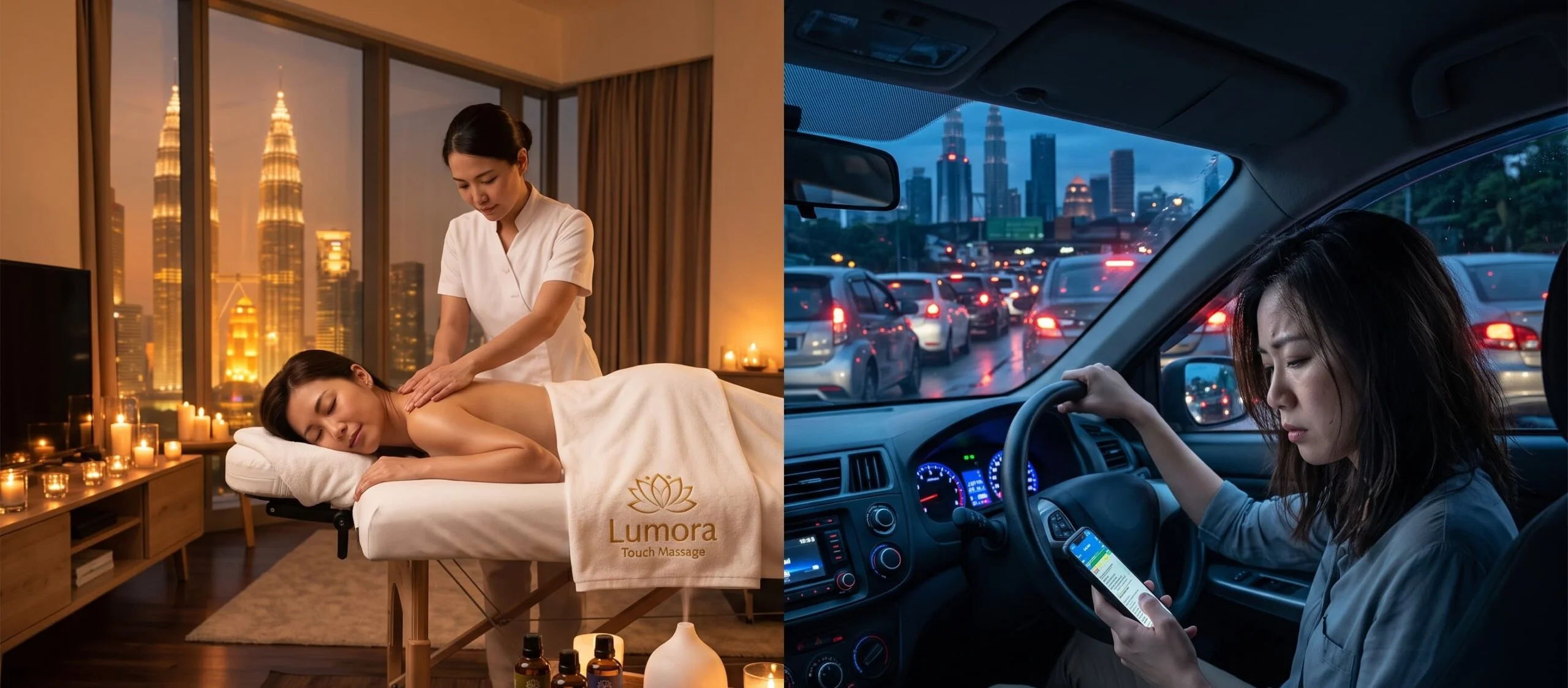
If you live and work in Kuala Lumpur, stress isn’t occasional. It’s background noise. The LDP at 7am. A full inbox before your first coffee. Back-to-back meetings that somehow still lead to evening catch-up calls. By the time Friday rolls around, a lot of people aren’t just tired — they’re running on empty in a way that sleep alone doesn’t fix.
Massage keeps coming up as a solution. But why does it actually work? Not in a vague, feels-good way — but chemically, physiologically, in ways your body can’t argue with. That’s what this article is about.
Before we get to the massage part, it helps to understand what you’re dealing with.
When you’re stressed — whether it’s a work deadline, a difficult conversation, or just the relentless pace of city life — your body activates what’s called the fight-or-flight response. It’s a survival mechanism. Your brain signals the adrenal glands to flood your system with cortisol and adrenaline.
Your heart rate jumps. Your muscles tighten. Your breathing gets shallow. Your digestive system slows down. All of your body’s resources redirect toward handling the immediate “threat.” In short bursts, that’s useful. The problem is that for most people living in a high-pressure environment, this response never fully switches off. The threats don’t stop — they just change shape. A ping from a client. A difficult commute. Another late night. Your body stays in a low-grade state of alert, sometimes for months.
That’s when the damage accumulates. Chronic elevated cortisol is linked to poor sleep, weight gain, weakened immunity, high blood pressure, and — over time — serious cardiovascular risk. It also makes anxiety worse, not better, because a body that’s always slightly on guard is a body that’s primed to catastrophise.
KL is one of Southeast Asia’s most intense working environments. Long hours are normalised. Traffic adds unpaid stress time to every workday. Many professionals are managing pressure across multiple time zones — dealing with clients in the UK, US, and the region simultaneously. There’s also a cultural tendency to push through rather than address burnout until it becomes impossible to ignore.
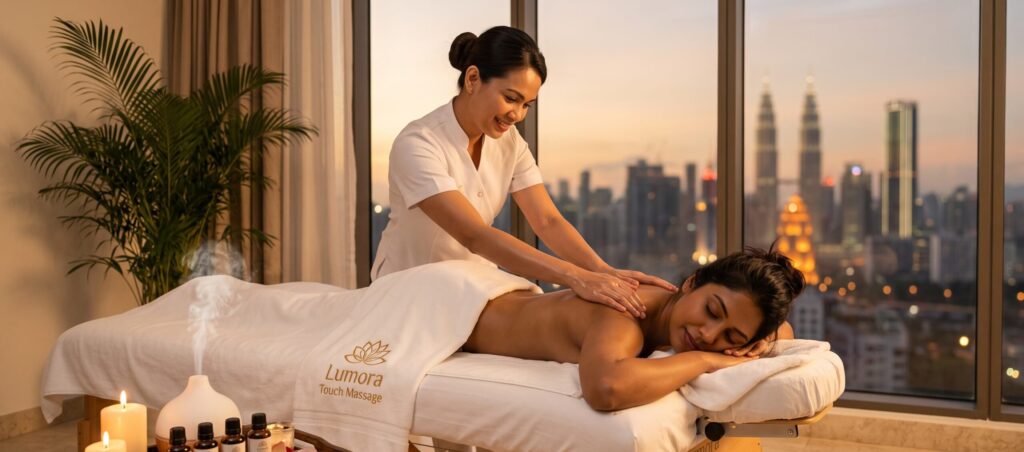
The mental health conversation is slowly shifting here. More people are recognising that managing stress isn’t weakness — it’s maintenance. The same way you service a car before it breaks down. Massage sits in a practical middle ground that a lot of other stress-management tools don’t. It doesn’t require a lifestyle overhaul. You don’t need to find a gym, learn to meditate, or block out two hours for a yoga class. A 60-minute session, delivered to your home or hotel room after a long day, gives your nervous system a genuine reset — biochemically, not just subjectively.
What Massage Does to Interrupt That Cycle
Here’s where it gets interesting.
Touch — the right kind, applied with the right pressure — directly activates your parasympathetic nervous system. That’s the opposite of fight-or-flight. It’s sometimes called the “rest and digest” response. And it’s not a mindset shift or a breathing exercise. It’s a physiological switch that happens automatically when the body receives therapeutic touch.
Within minutes of a massage session beginning, a chain of measurable changes starts happening:
Cortisol drops. Research consistently shows that massage reduces cortisol levels — some studies cite reductions of up to 30% in a single session. That’s not a small number. Cortisol is the primary stress hormone driving that constant on-edge feeling. Lower cortisol means your body is physically less stressed, not just mentally.
Serotonin and dopamine rise. These are your mood-regulating neurotransmitters — the ones that anti-anxiety medication often targets synthetically. Massage triggers a natural increase in both. Serotonin stabilises mood. Dopamine drives motivation and feelings of reward. More of both means less anxiety, better emotional regulation, and a noticeably lighter feeling after a session.
Endorphins release. Your body’s natural painkillers flood in. This is part of why the post-massage feeling is so distinct — not just relaxed, but genuinely good. Almost floaty. Endorphins don’t just reduce physical pain; they directly counteract emotional distress too.
Heart rate slows. Blood pressure drops. These are measurable changes. The parasympathetic system takes over, your cardiovascular system calms, and your body stops treating everyday life like an emergency.
Muscles release tension. Stress lives in the body. Most people carry it in their neck, shoulders, and jaw without even realising it. When those muscles release — properly, under the hands of someone who knows what they’re doing — the psychological relief that follows is real. There’s a well-documented connection between muscular tension and anxiety; releasing one genuinely reduces the other.
Which Type of Massage Works Best for Stress?
Not all massage is equally effective for stress and anxiety. The type matters.
Aromatherapy Massage is the most targeted option for stress relief specifically. The combination of therapeutic touch and essential oils works on two pathways simultaneously — the oils are absorbed through the skin and inhaled, acting directly on the limbic system (the part of the brain that processes emotion and memory). Lavender, frankincense, and lemongrass are particularly well-documented for reducing anxiety. When paired with the physiological effects of the massage itself, the results are noticeably stronger than either alone.
Balinese Massage combines long flowing strokes, acupressure, and gentle stretching — a full-body reset that addresses both physical tension and mental fatigue in a single session. Excellent for people who feel overwhelmed rather than just physically tired.
Deep Tissue Massage is better suited when stress has manifested as specific physical tension — chronic neck pain, shoulder tightness, lower back issues. Addressing the physical symptoms directly often provides significant mental relief too, especially when the pain itself has become a source of ongoing stress.
Reflexology targets pressure points in the feet connected to the nervous system and key organs. For people who carry anxiety in their body without obvious muscular tension, reflexology can produce surprisingly deep relaxation.
How Often Should You Get a Massage for Stress Relief?
There’s no single right answer, but research and clinical experience point to a few patterns.
A single session provides real, measurable relief — but it’s temporary. Cortisol reduction from one massage typically lasts a few days. For people dealing with acute stress, even that window can be genuinely valuable. For ongoing stress management, most therapists recommend a session every 2 to 4 weeks. At that frequency, the benefits compound — your body starts spending more time in a parasympathetic state overall, sleep quality tends to improve, and anxiety levels decrease consistently rather than just briefly after each session. If your stress is severe or work cycles are particularly intense (financial year-end, major project launches, travel-heavy periods), weekly sessions for a month or two can reset your baseline significantly.
The key thing most people miss: waiting until you’re completely burnt out before booking is like waiting until your car overheats before checking the coolant. The maintenance approach works better than the emergency approach.
Massage isn’t a replacement for professional mental health support if you’re dealing with clinical anxiety or depression. It’s a complement, not a cure. But for the vast majority of people dealing with everyday stress — the kind that builds up from work, city living, and a schedule that never quite empties — it’s one of the most evidence-backed, accessible, and genuinely effective tools available.
And the home delivery version removes the one friction point that stops most busy people from actually doing it: having to go somewhere.
| Massage Type | Primary Health Benefits & Target Focus | Duration & Premium Rates |
|---|---|---|
| Aromatherapy Massage | Combines gentle, fluid techniques with calming essential oils. Ideal for melting away intense mental anxiety, soothing the nervous system, and restoring total emotional balance. |
60 mins: RM150 90 mins: RM200 120 mins: RM240 |
| Balinese Massage | A traditional full-body therapy utilizing firm, deep pressure, skin rolling, and long strokes. Excellent for targeting deep muscle knots and significantly boosting blood circulation. |
60 mins: RM150 90 mins: RM200 120 mins: RM240 |
| Deep Tissue Massage | Focuses on deep layers of muscle tissue to release chronic stiffness, stubborn tension, and localized pain. Perfect for active athletes or professionals working long desk hours. |
60 mins: RM150 90 mins: RM200 120 mins: RM240 |
| Foot Reflexology | Targets precise reflex zones and pressure points on the feet corresponding to vital organs. Refreshes tired feet, reduces fluid stagnation, and rebalances body energy. |
60 mins: RM150 90 mins: RM200 120 mins: RM240 |
| Pre-Natal Massage | A highly gentle, nurturing treatment specifically tailored for expecting mothers. Safely minimizes lower back strain, reduces leg swelling, and promotes deep, restful sleep. |
60 mins: RM150 90 mins: RM200 120 mins: RM240 |
| Post-Natal Massage | A specialized restorative recovery therapy for new mothers. Designed to safely relieve pelvic tension, minimize water retention, and support the body’s natural healing process. |
60 mins: RM150 90 mins: RM200 120 mins: RM240 |
Book a Stress Relief Massage in KL — We Come to You
Lumora Touch Massage offers aromatherapy, Balinese, deep tissue, and reflexology sessions delivered to your home, condo, hotel, or office across Kuala Lumpur and Klang Valley.
Available daily from 10 AM to 11 PM. You can book as little as 1 hour in advance. Just WhatsApp or call us — we keep the process simple on purpose.
Learn why home massage beats a spa visit for stress relief.
Frequently Asked Questions
Can one massage session really reduce stress?
Yes — measurably. Cortisol levels drop and serotonin rises within a single session. The effect is real, even if it’s temporary without regular follow-up sessions.
Is aromatherapy massage better than regular massage for anxiety?
For anxiety and stress specifically, yes. The essential oils add a second layer of effect through the limbic system — the brain’s emotional processing centre — making the combined result noticeably stronger.
How long do the stress-relief effects of a massage last?
From a single session, typically 2 to 5 days. With regular sessions (every 2 to 4 weeks), the effects accumulate and your baseline stress level decreases over time.
Can massage help with work-related burnout?
It can be a significant part of recovery, yes. Burnout involves chronic physiological stress activation — exactly what massage is designed to interrupt. It won’t fix the root causes, but it gives your nervous system the space to recover.
Is home massage as effective as going to a spa for stress relief?
Equally effective — and for some people, more so. Being in your own environment eliminates the stress of travel and unfamiliar surroundings, which can actually deepen the relaxation response.
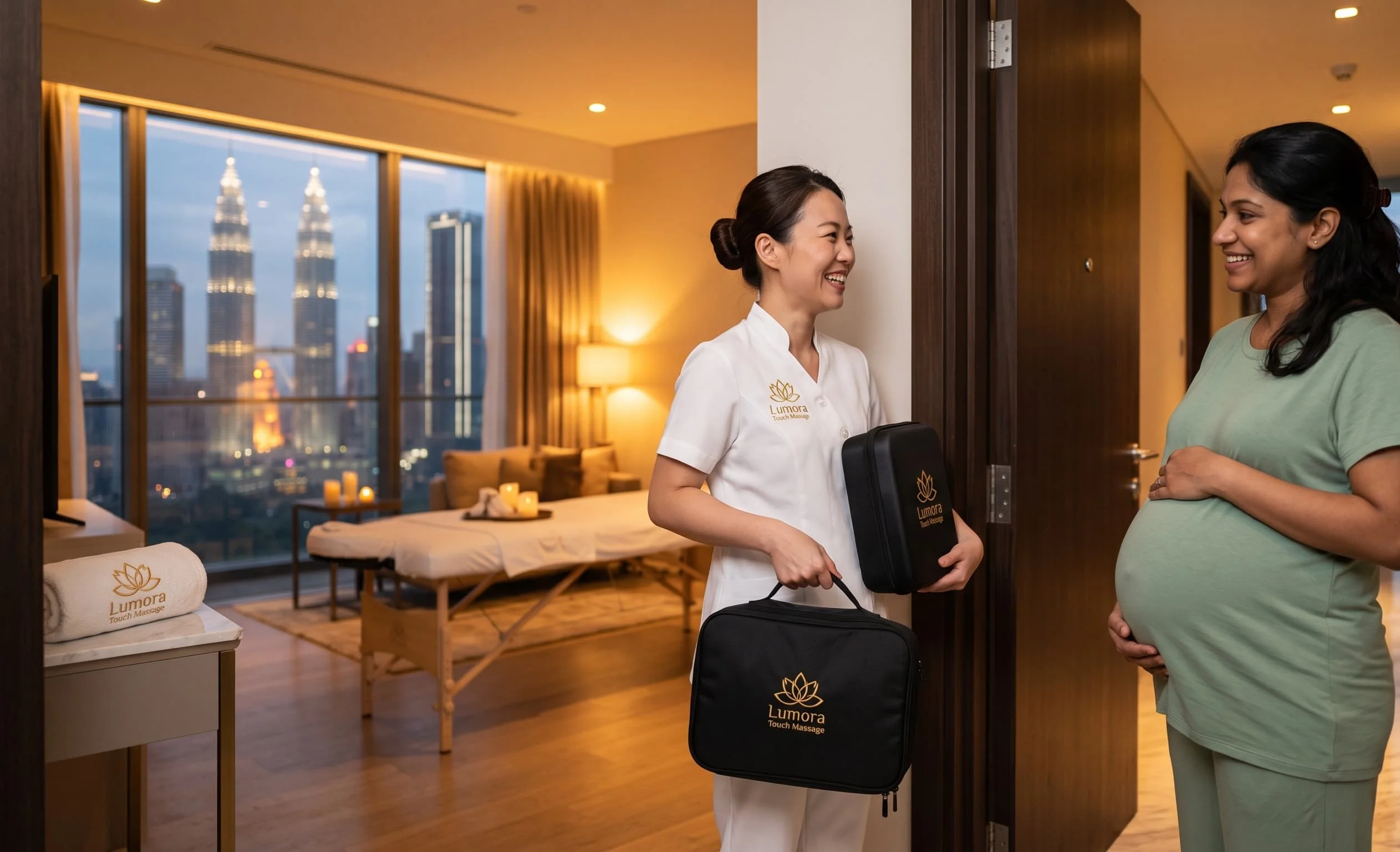
Prenatal Massage Kuala Lumpur — Pregnancy Massage at Home
Safe, gentle prenatal massage delivered to your home in KL....
Read More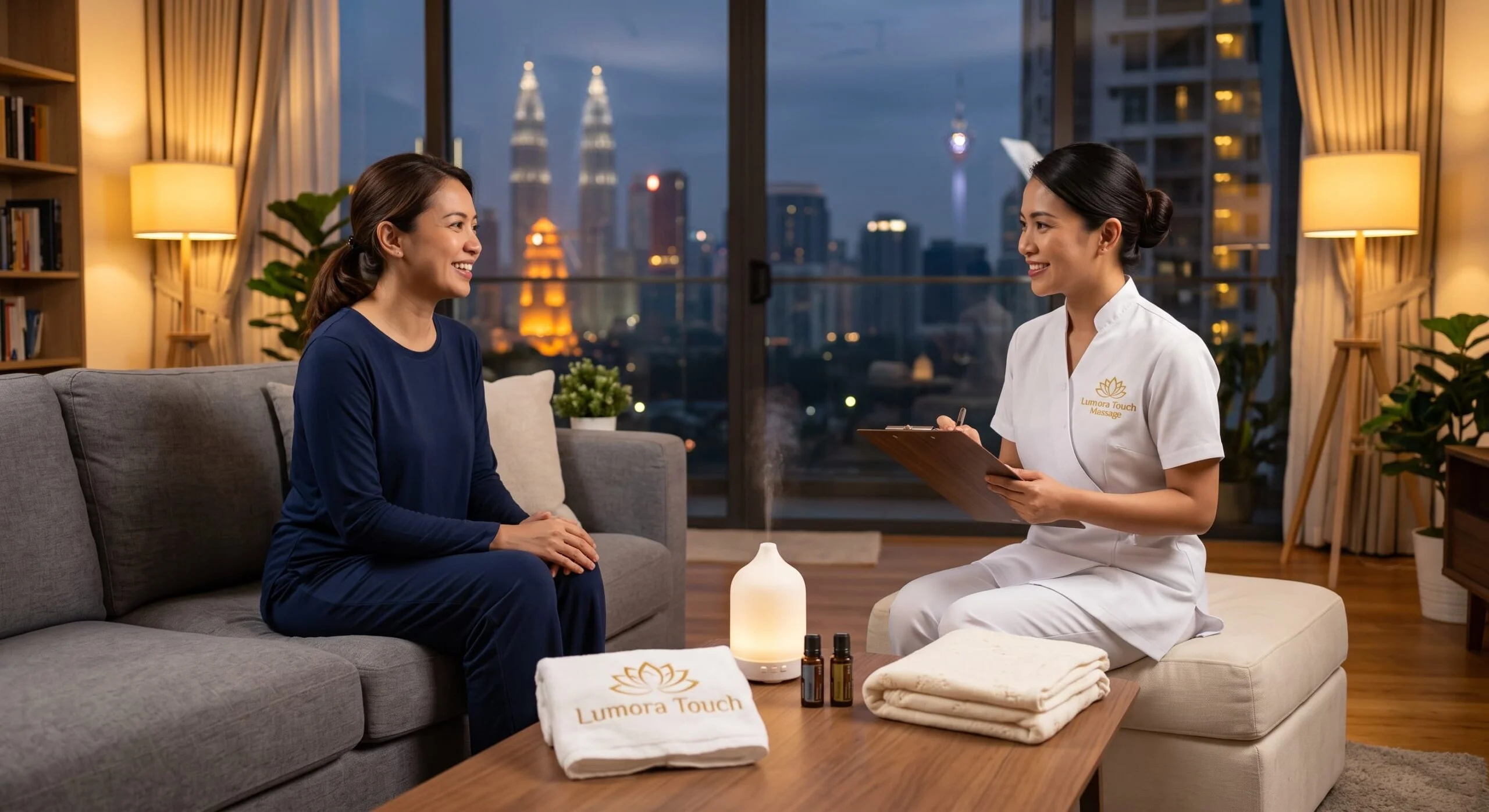
Postnatal Massage KL — Confinement Massage at Home
Gentle postnatal & confinement massage in KL, delivered to your...
Read More
Massage Damansara Perdana — Home Massage from RM150
Professional home massage in Damansara Perdana, delivered to your condo...
Read More
Aromatherapy Massage Near Me in KL — Why Home Delivery Beats the Spa
Searching for aromatherapy massage near me in KL? Skip the...
Read More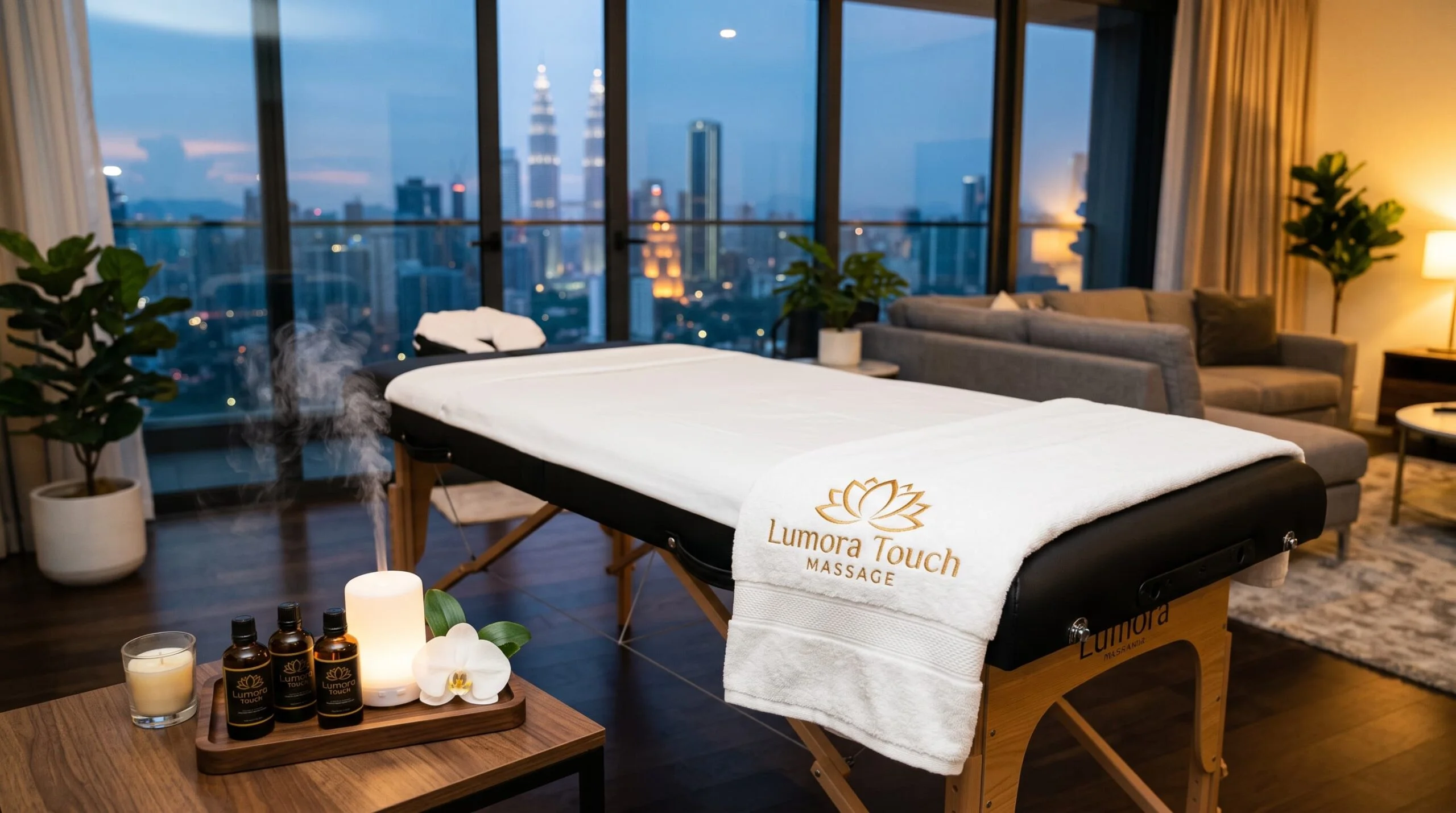
What Is Outcall Massage? Meaning, How It Works & Cost
What is outcall massage? It's a professional massage delivered to...
Read More